Serpentine3D: Open-source NURBS modeller with AI for Linux
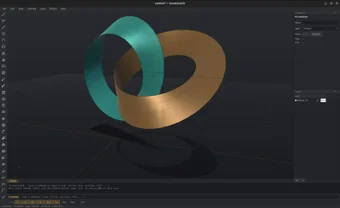
Serpentine3D, created by Chisomo Banzi, is an open-source NURBS surface modeller built to support precise freeform CAD workflows. The app produces and edits NURBS geometry using a professional geometry kernel and supports cross-platform model exchange and batch processing. Key elements include a muscle-memory-friendly command line, real-time GPU viewport, and server-capable scripting for automation. Industrial designers, architects, and 3D artists seeking a native Linux alternative gain a precision-oriented modelling environment and automation hooks.
What tasks can you actually use it for?
The tool targets precision surfacing tasks such as industrial design, architectural freeform panels, and detailed product prototyping, driven by the OpenCASCADE geometry kernel. It handles model exchange and server-side conversions so designers can integrate outputs into downstream pipelines. For unattended processing the bundled serp3d-batch runs scripted jobs and file conversions on machines without a display.
- .3dm (Rhino)
- STEP
- OBJ
- glTF
- DXF
- SVG
- USD
How reliable are modeled surfaces and exports?
The app generates NURBS using the OpenCASCADE kernel, giving it the same deterministic modelling basis used in professional CAD tasks rather than informal polygon sculpting. Batch processing preserves geometry fidelity during format exchange, and the OpenGL viewport provides immediate visual feedback while editing. Early adopters from the Rhino3D community describe a "solid" core workflow, which suggests outputs meet expectations for established NURBS toolchains.
A Rhino-style workflow and scripting favor experienced CAD users
The interface adopts a Rhino-style command line that benefits users familiar with that workflow but requires adjustment from GUI-only designers. The built-in Model Context Protocol server lets external assistants execute modelling commands, manage layers, and capture viewport screenshots, enabling automation or AI-augmented edits. The GUI requires a GPU with OpenGL 3.3, while the headless mode and MCP server operate on standard server environments without a display.
Good fit for technical designers who can extend and validate outputs
The tool rewards users who can customize and script, because it exposes a Python-oriented architecture and open-source codebase for extensions. Community interest from Rhino users signals practical applicability for Linux workflows. Expect to perform manual validation on complex surfaces used in production, and treat automated or AI-assisted edits as steps that require human review before final delivery.